Why We Celebrate Saraswati Puja
Saraswati Puja (also known as Vasant Panchami) is a festival that honors the Goddess of knowledge, music, arts, and learning. It marks new beginnings, especially in the life of students and artists.
Who is Goddess Saraswati?
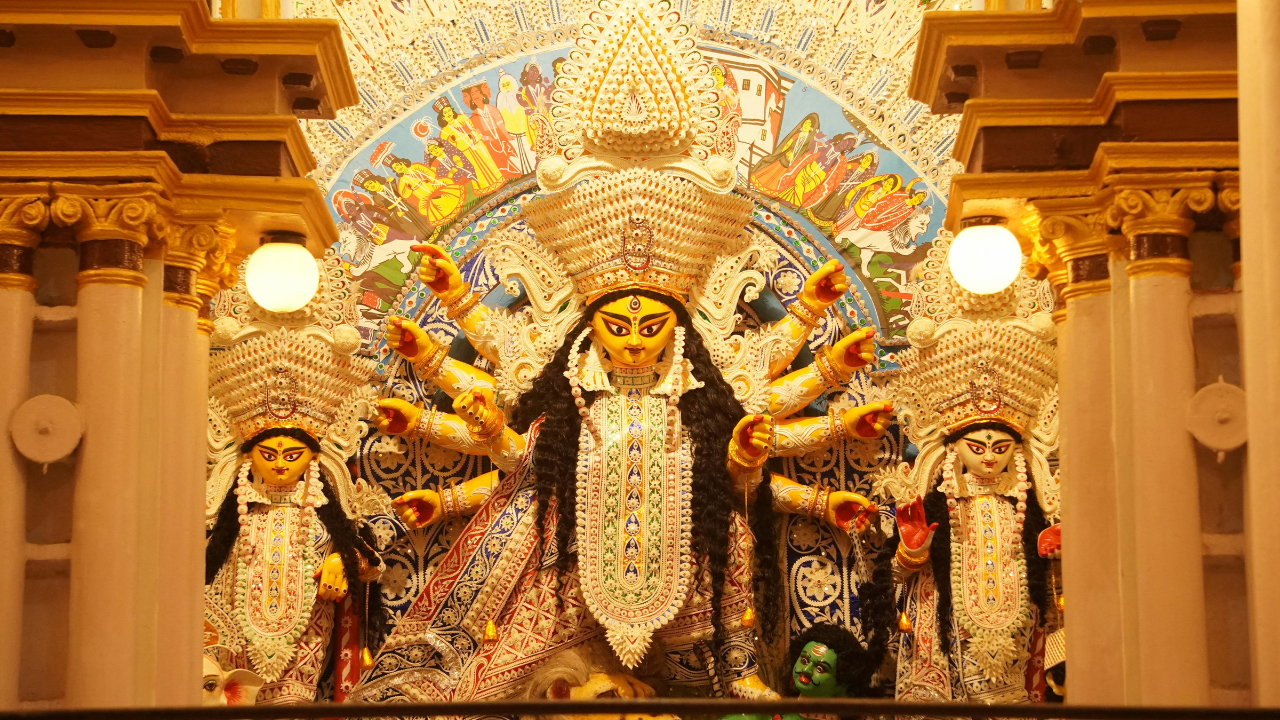
Goddess Saraswati is considered the Mother of Knowledge (Vidya Mata) in Hinduism. She is usually depicted wearing a white sari, seated on a lotus, holding a veena (a musical instrument), a book, and a rosary. The white attire symbolizes purity, the lotus represents enlightenment, and the veena stands for arts and creativity.
Her blessings are sought by students, teachers, artists, musicians, writers, and scholars who seek clarity of thought, creative inspiration, and success in learning.
Deeper Meaning: Why Saraswati Puja Is Celebrated
- Celebration of Knowledge and Wisdom: Saraswati Puja highlights the importance of knowledge. In Hindu tradition, gyan (knowledge) is considered one of the greatest forms of wealth; it guides life and removes ignorance.
- Start of Spring (Vasant Ritu): The festival falls on Vasant Panchami, signaling the arrival of spring. Fields of yellow mustard bloom and nature becomes lively — yellow is associated with Saraswati as a color of energy and learning.
- An Auspicious Day to Begin Education: Many families choose this day for Vidyarambh (the child's first formal lesson). Pens, books, and instruments are placed before the deity for blessings.
- Honoring Artists and Musicians: Musicians and artists worship their instruments and tools, asking for creativity and mastery.
Mythological Significance
According to Hindu mythology, when Lord Brahma created the universe it lacked speech, order, and intelligence. To bring wisdom into creation, he created Goddess Saraswati. She is said to have revealed the Vedas and given humans language, music, and the ability to reason.
Saraswati is often called Ved Mata because she is associated with the Vedas — the foundational scriptures of Hindu knowledge. Mythological stories also speak of how divine knowledge helped gods overcome demons, illustrating the power of wisdom over brute force.
Rituals and Practices
Preparations for Saraswati Puja usually include cleaning the home or school, decorating the altar with flowers, and placing an idol or image of Saraswati.
Common practices include:
- Book and Pen Puja: Students place their books, pens, and notebooks before the goddess and often refrain from using them for the rest of the day as a mark of respect.
- Offerings: Devotees offer yellow flowers, sweets like halwa and boondi, kheer, and fruits (bananas are common).
- Cultural Programs: Schools and communities arrange music, dance, debates, and art exhibitions to celebrate learning and creativity.
Regional Celebrations Across India
Saraswati Puja is observed across India, but customs vary by region:
- West Bengal: Celebrated with grandeur; schools and neighborhoods host elaborate pujas and cultural events.
- Bihar & Jharkhand: Students worship their books and musical instruments; kite flying is also a popular activity in some areas.
- Uttar Pradesh: Children often start their formal education on this day; local schools conduct pujas and distribute prasadam.
- South India: Known as Sri Saraswati Jayanti; musicians and classical dancers observe the day with special prayers and recitals.
Importance for Students and Creative People
Students believe Saraswati Puja helps improve concentration, memory, and confidence. The festival also acts as a reminder of discipline and dedication required for learning. For artists and musicians, the day is a moment to seek inspiration and renewal of practice.
Overall benefits often associated with the observance include reduced exam anxiety, renewed motivation, and a cultural respect for education and the arts.
Modern Relevance
Even in a digital age, Saraswati Puja remains deeply relevant. Whether the tools of learning are books, laptops, or instruments, the underlying principle is unchanged — knowledge and creativity are sacred and powerful. The festival encourages humility, lifelong learning, and the pursuit of excellence.